
NICHQ Employee Spotlight: Madeline D’Onfro
Each month, we’re shining a spotlight on a NICHQ employee, asking them to share their memories, advice, and goals. This month, Madeline D’Onfro, MPH, a Senior Project Manager for NICHQ’s Community-Centered Hospital Initiative (CCHI), shares her professional goals and career journey thus far.
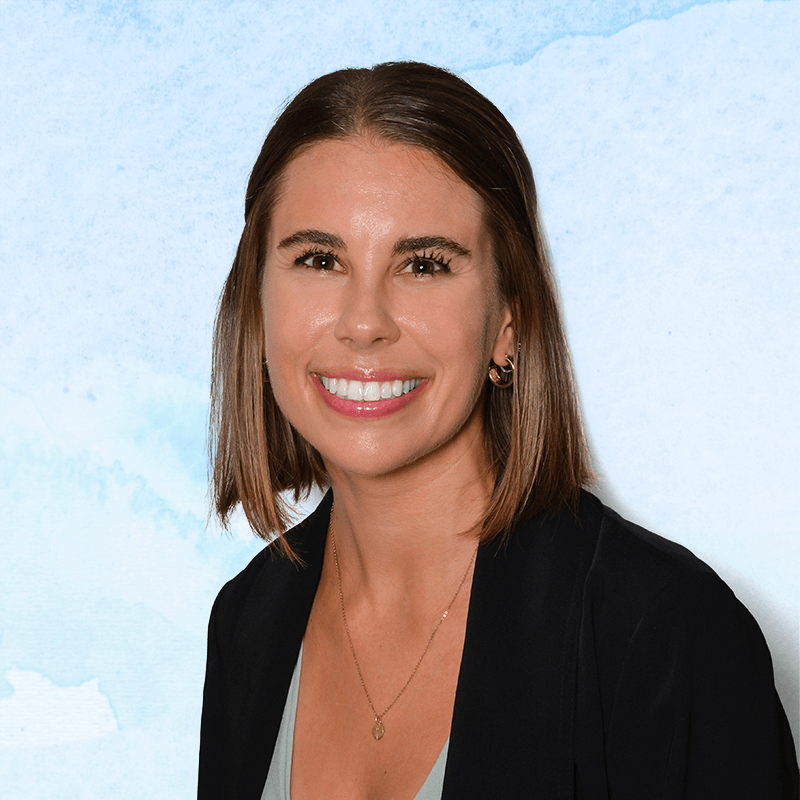
Senior Project Manager, Community-Centered Hospital Initiative (CCHI), Hemoglobinopathies National Coordinating Center (HNCC), United HealthCare Catalyst Initiative: Infant Health Equity, and CDC Foundation Respectful Maternal Care Resources for Perinatal Quality Collaboratives
Full name and title: Madeline D’Onfro, MPH
Job Title: Senior Project Manager
Key Projects: Community-Centered Hospital Initiative (CCHI), Hemoglobinopathies National Coordinating Center (HNCC), United HealthCare Catalyst Initiative: Infant Health Equity, and CDC Foundation Respectful Maternal Care Resources for Perinatal Quality Collaboratives
Joined NICHQ: January 2023
How has your background led you to join a national children’s health organization?
I began my career as an AmeriCorps volunteer at a community nonprofit in Boise, Idaho. I ended up staying in Boise for eight years, working at community nonprofits focused on gender violence prevention, housing and homelessness, and conservation. Those experiences helped me build a deep connection to my community. There’s a Paul Wellstone quote, “we all do better when we all do better,” that really resonated with me and grounded me in my work. My time at the community level taught me the importance of showing up for one another and working toward a future where everyone feels safe, has their needs met, and can truly thrive.
That foundation in community health inspired me to pursue a master’s in public health, which ultimately led me to NICHQ. I’m proud and grateful to be part of an organization that so closely reflects my personal values and is striving toward a future where every child has the opportunity to thrive.
Your time with NICHQ started with an internship. Can you speak to that experience and how you found your way back to NICHQ?
While I was pursuing my MPH at Boston University, I was looking for a practicum in maternal and child health. I remember when I first heard about the NICHQ internship, I was so excited because it seemed like the perfect fit, and I was hopeful that I would get the position, which, fortunately, I did. That summer as an intern, I worked on the Hemoglobinopathies National Coordinating Center (HNCC) project, which is focused on sickle cell disease. I was immediately drawn to the mission of the organization, the sickle cell disease work we were doing, and the people at NICHQ. Then that fall, just a couple of months after my internship ended and as I was finishing my degree at Boston University, NICHQ posted a job opening for a project manager position with the HNCC project. It felt so serendipitous and exciting, and I applied right away. It was really such a gift to return to the organization with the knowledge that I already loved the culture, I already admired the colleagues I was going to be working with, and, most importantly, I already felt deeply connected to the work NICHQ was leading.
How do you plan to use your previous experience working with Perinatal Quality Collaboratives (PQCs) and hospitals during your time with the New York State Birth Equity Improvement Project (NYSBEIP) to inform your work as a Senior Project Manager for the Community-Centered Hospital Initiative (CCHI)?
Working on the New York State Birth Equity Improvement Project (NYSBEIP) was an incredible experience. In that role, I worked closely with the New York State Perinatal Quality Collaborative (PQC) and more than 70 hospital teams across the state, which gave me a clear view of both the strengths and challenges of hospital-based change efforts. Clinical staff were eager and deeply committed to improving care, but they were also navigating real barriers, including staffing shortages, policies, and competing day-to-day demands that sometimes made progress difficult.
At the same time, I saw how powerful PQCs can be in connecting hospitals, facilitating shared learning, and creating momentum for improvement. That experience strengthened my respect for our PQC partners and the unique role they play in advancing change.
I also know that no two PQCs look the same – structures, funding, and state contexts vary widely – so I look forward to meeting each partner where they are. I am hopeful that my experience with NYSBEIP will provide me a strong foundation to bring into CCHI: balancing an understanding of hospitals’ challenges with a belief in their capacity for change, and working in partnership with PQCs to support meaningful and sustainable progress.
As CCHI starts its second project year, what are you most looking forward to in year 2? What are some of the future goals for the project?
I am really excited for year two! I’d say I’m most excited about working more closely with the PQCs and hospitals in the pilot states this year, while centering community leadership. We’ll be focusing on what authentic engagement with communities looks like in practice and supporting hospitals and PQCs as they reimagine how they work alongside community-based organizations (CBOs). One of the key goals for this year is to reach a point where communities, CBOs, PQCs, and hospitals are co-designing initiatives together that directly address maternal and infant mortality and morbidity.
How has working on multiple projects throughout your time with NICHQ helped you grow professionally? Personally?
I’m very grateful to have worked on multiple projects at NICHQ. I believe I’ve worked on six different projects since I started here, and each has taught me something new. I’ve seen different leadership styles, team cultures, project management approaches, funder types, and content areas, and I think that these varied experiences have really broadened my perspective and strengthened my ability to connect dots across projects. Professionally, it’s made me a lot more adaptable and strategic in the way I approach projects, and I think personally it has deepened my appreciation for collaboration and the many ways people approach this work.
What does NICHQ’s mission mean to you?
That’s a great question! I really love that NICHQ’s mission centers on children. I think it’s important to focus on the most vulnerable among us, and I think when we do that as a society, we all benefit. By centering on children, we’re also naturally centering families. We’re looking at long-term outcomes, and we’re really thinking about the health of future generations. As we all know, this work can be heavy. We’re often holding the pain and inequities that so many families in our country face, but NICHQ’s mission helps me remain hopeful and keeps me grounded in the belief that every child deserves to be born safely into a world where they have the opportunity to thrive.
What is the best piece of advice you have ever received?
This was a hard one because I’ve received so much good advice throughout my career. Lately, I’ve been coming back to a piece of guidance from one of my favorite books, Emergent Strategy by adrienne maree brown. She writes about the principle of “moving at the speed of trust: focusing on critical connections more than critical mass, and building resilience by building relationships.”
The phrase “move at the speed of trust” has been especially meaningful for me. In my time at NICHQ, I’ve seen firsthand that relationships are at the heart of public health work. This guidance has shaped how I approach every project: by prioritizing trust and connection with colleagues, partners, and the communities we serve. I’ve found that building that foundation of trust before the work begins can deeply and positively impact project work.
Who or what inspires you professionally?
I’m continually in awe of the people I work with and the projects that we work on. Most recently, I’ve been feeling especially inspired by the Healthy Start sites I’ve been working with on one of my projects. The sites we work with are community-based organizations addressing racial and ethnic differences in rates of infant death and maternal health outcomes. Being able to see firsthand how dedicated they are to the families in their community and deeply committed to the work in the face of a lot of really complex challenges has just been very re-energizing for me. It has definitely helped renew my belief in what’s possible – especially when community is leading.