
NICHQ Employee Spotlight: Lauren Sapp
Each month, we’re shining a spotlight on a NICHQ employee, asking them to share their memories, advice, and goals. This month, Lauren Sapp, MPH, a Communications Coordinator for NICHQ’s Community-Centered Hospital Initiative (CCHI) and Maternal Health Action & Resource Center (MHARC), shares her professional goals and career journey thus far.
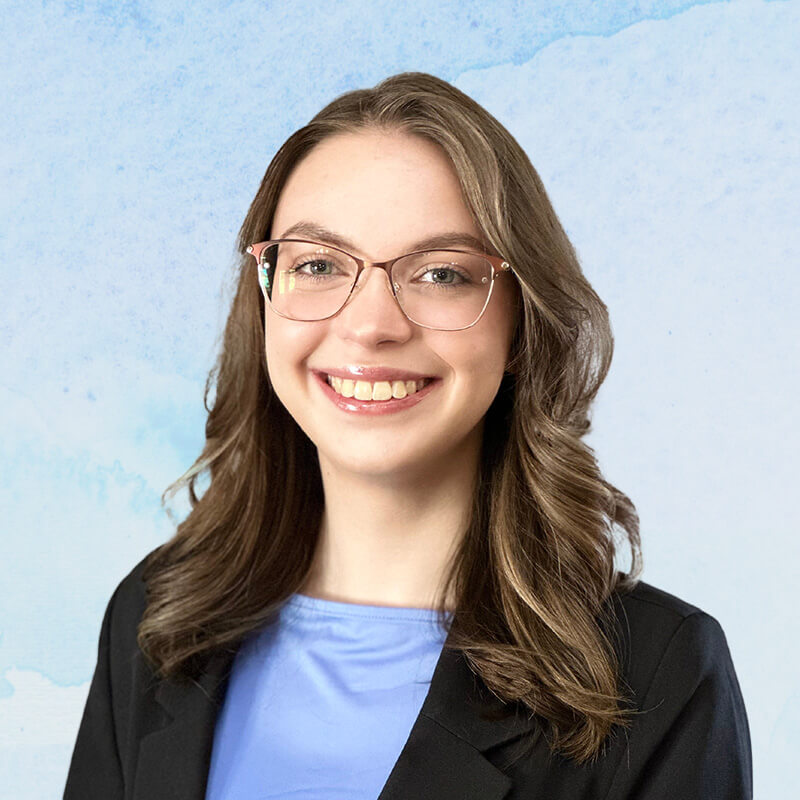
Communications Coordinator, Community-Centered Hospital Initiative (CCHI) and Maternal Health Action & Resource Center (MHARC)
Full name and title: Lauren Sapp, MPH
Job Title: Communications Coordinator
Key Projects: Community-Centered Hospital Initiative (CCHI) and Maternal Health Action & Resource Center (MHARC)
Joined NICHQ: November 2024
How has your background led you to join a national children’s health organization?
I always knew I would end up working in the health space, but I wasn’t sure how. My mom works as a director of pediatric oncology nursing, and my dad is a respiratory therapist in the NICU, so there has been a call for me to follow in their footsteps. That said, I’m terrified of all things blood and needles, so I could never do anything clinical. I looked into options like child life specialist and art therapy programs, but nothing was clicking. Things didn’t fall into place until I discovered the world of health communications.
My background is technically in journalism, but I always had what the industry calls a ‘beat’ in health. My stories typically focused on pediatric and mental health, which led me to an internship with my college campus’s mental health and counseling service. During this internship, I created a newsletter, helped establish and maintain media relationships, and created materials for print, social media, and outreach events. My preceptor actually encouraged me to pursue my MPH degree because she saw the gaps in health communication firsthand. Getting my master’s degree really allowed me to look deeper into problems I’m passionate about, including adolescent suicidality and environmental justice. When I came across the job posting from NICHQ, it was as if all the stars were aligned, allowing me to combine my love for storytelling and design and the calling I still felt toward child health.
How do you plan to incorporate your past experiences in your current role as a Communications Coordinator for NICHQ?
In my previous roles, I did a lot of design work, and I’ve been able to expand upon these experiences during my time with NICHQ, mainly by assisting with newsletters, presentation materials, and website and social media content. I’ve also been able to tap back into my storytelling by conducting various interviews with staff and NICHQ partners.
One area that I’ve really grown in lately is the marketing and branding side of communications. Over the past few months, I’ve been leading the branding process for the Community-Centered Hospital Initiative (CCHI). CCHI is a very special project, so I wanted to create a brand package that truly spoke to the purpose of the project. This involved several hours of conceptualizing logos, surveying the project team to understand how the work is interpreted by different individuals, combining these ideas, and studying the psychology of different colors to communicate the underlying themes of the project. This was the first time I had ever done a branding project on this scale, so to see it come together has been really invigorating. I’m ready to see it out in the world!
What does a communications specialist bring to NICHQ? What skills and responsibilities does this role entail?
I think communications specialists bring a lot to NICHQ, but I think there’s an extra layer added by my having an MPH. In a general sense, a communications specialist has to be able to see both the big picture and hone in on the finer details. In my project work, there’s a balancing act of understanding and adhering to the wants and needs of the project teams, but also having to communicate these ideas in a way that translates well across channels. I love taking data and finding ways to communicate that information to the public. I think that’s something that I’ve always done pretty well, and this ability became tailored during my collegiate career. We learned the ins and outs of providing information in layman’s terms, which is something that people may not always consider when they’re in the health field. Because I have a journalism and health background, I have an understanding of both systems and use that as the foundation of my work.
Being adaptable is a critical component of this role, and that need for flexibility can increase tenfold when you’re allocated to several projects. There’s a lot of time that goes into the design work of this job, from slide decks to one-pagers, the lot. This gets paired with content planning to ensure NICHQ is distributing project deliverables on time, sending our different newsletters that align with awareness days and months, plus pertinent project and partner resources, and maintaining our social media presence is another aspect of this job that requires balance. Operating under a content calendar to time content meticulously, it’s tricky to navigate unforeseen bumps on the road, but it’s the nature of the job. You have to be able to switch your focus on a whim, and that’s something that I’m still learning to master.
Looking forward, what are you hoping to accomplish in the upcoming year?
In the upcoming year, I’m really looking forward to expanding the role of the communications department on the Maternal Health Action & Resource Center (MHARC) project. With Year 2 underway, there are a lot of things brewing that the entire team is excited for, and one of those is finding ways to elevate the work of State Maternal Health Innovation grantees on a national scale. I’m looking forward to learning more about what the grantees are doing and shining a light on their successes and the important work that’s being done. We’re still strategizing how to go about it, be it more in-depth profiles similar to this series, video clips across social media, or something else entirely. Something I’m passionate about is finding out the direct impact of NICHQ’s work, and I think this is opening the door to allow us to do more of that across the organization. Getting firsthand accounts of how you’ve helped the communities you serve is so special and is a testament to our cause. It makes it all the more worthwhile.
On a more personal note, I’m also interested in getting a Hypertext Preprocessor (PHP) certification. In this role, I do my fair share of backend website work, which is something I previously dabbled in but never pursued seriously. I’ve become more interested in developing these skills further and taking a PHP developer course.
You have experience working on multiple projects during your time with NICHQ. What does NICHQ’s mission mean to you?
To me, NICHQ’s mission means giving everyone a fair chance to live a healthy life. As a communications coordinator, I get to see the work that a lot of our projects are doing at a very high level and convey the importance of NICHQ’s work to different audiences, from the general public to partner organizations and other leaders in the MCH field. Our project teams do an amazing job of meeting people where they are, understanding their circumstances, and providing access to the necessary resources and support to receive quality care. I’m thrilled to be able to develop materials that aid in that process and help deepen some of those connections.
Who has been the biggest influence on your career path and why?
As I mentioned earlier, my parents played a huge role in influencing me to pursue a career in the child health space. They were both so encouraging, especially as I navigated life through college and post-grad, and are always in my corner, which I’m forever grateful for.
With that said, I have to give so much credit to one of my college professors, Dr. Amber Barnes. She saw potential in me from day one in her class and really changed my perspective on the world of public health. The One Health approach to public health is something that she heavily focused on in her classes, which allowed me to understand how intertwined animal, environmental, and human health are. All these components are deeply important to me, so adopting this approach made me want to advance my knowledge of and role in public health. She also encouraged me to go after what I want – study the topics I want, pursue the roles I want to have, and have the confidence in myself to move the work forward.
What is a valuable lesson you’ve learned from a work experience, good or bad?
I once had to cover a cold case, and that experience was very draining and something I was not prepared for in the slightest. I had to connect with family members of the victim, and I remember I would be doing something completely unrelated – like driving to campus – and would just be plagued with the thought of something going wrong during the interview or not doing the story justice. I couldn’t keep my mind off this assignment for weeks, and it began to affect other areas of my life. So, all that said, something that I’ve learned, but admittedly still struggle with sometimes, is understanding the importance of work-life balance. While this is a very general answer, I think it’s an important thing for people to recognize, especially those in the health field. This can be very heavy work, so it’s important to know the power of separating our work lives from our personal lives. Carrying the weight of work life into personal life can impact not only productivity but also the quality of work (and vice versa), which is something I never want to sacrifice.