
NICHQ Employee Spotlight: Laura Sabino
Each month, we’re shining a spotlight on a NICHQ employee, asking them to share their memories, advice, and goals. This month, Laura Sabino, a Project Coordinator for NICHQ’s National Network of Perinatal Quality Collaboratives (NNPQC) and Maternal Health Action & Resource Center (MHARC), shares her professional goals and career journey thus far.
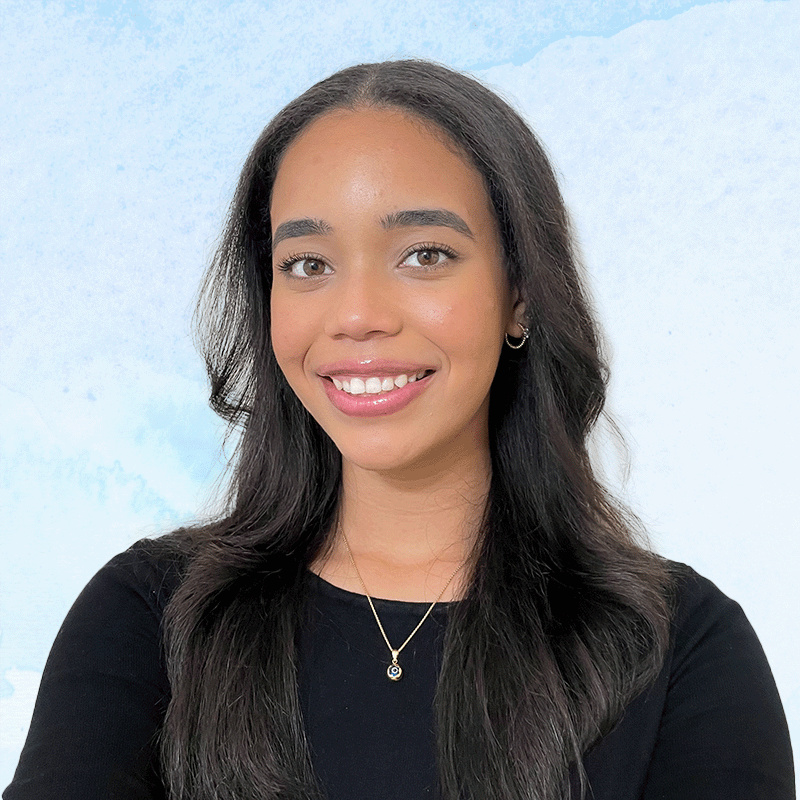
Project Coordinator, National Network of Perinatal Quality Collaboratives (NNPQC) and Maternal Health Action & Resource Center (MHARC)
Full name and title: Laura Sabino
Job Title: Project Coordinator
Key Projects: National Network of Perinatal Quality Collaboratives (NNPQC) and Maternal Health Action & Resource Center (MHARC)
Joined NICHQ: November 2024
How has your background led you to join a national children’s health organization?
I was always interested in medicine in school, so I was pre-med in college. I was pretty dead set on being a doctor until I did a public health internship at a pediatric clinic in Jacobi Medical Center in New York City, which is part of the largest public hospital network in New York. It’s also in the Bronx, which is where I grew up. Doing that internship exposed me to the world of public health for the first time. I was doing social determinants of health (SDOH) screenings on the families that came into the clinic.
I think it opened my eyes to a field that could satisfy that interest in working on something related to medicine, as well as letting me explore more social impact-related topics and what it looks like to invest in and help the communities that I’m a part of. It was a good first exposure to public health, and since then, I’ve started thinking about ways that I could be involved in work like that. When I was looking for jobs post-grad, that experience really stuck with me, and I think that’s what led me to work at NICHQ.
How do you plan to incorporate your past experiences in your current role as a Project Coordinator for NICHQ’s National Network of Perinatal Quality Collaboratives (NNPQC)?
Almost all of my Clifton Strengths are in relationship building, so being collaborative and having relationship-building skills are something I’ve always tried to further develop. NNPQC is the coordinating center for all Perinatal Quality Collaboratives (PQCs), so at the core, we’re really invested in collaboration and trying to improve maternal health through quality improvement efforts in every state. We’re bringing states together so that they can learn from each other and find new initiatives to implement in their states.
I’ve always been interested in bringing groups of people together to improve something. For example, at Jacobi, I was working with clinical staff to improve the way they did their SDOH screening, but I’ve also had totally unrelated experiences, like being a teaching fellow and collaborating with other teaching staff to create a comprehensive science curriculum for middle schoolers. And so, I think I learned a lot of communication skills, a lot of collaboration skills, and what it’s like to work with other people. I think that really helps me support my team and connect with PQCs so that we can all collaborate and help push that work forward.
What’s one initiative or project that you’re working on with the NNPQC that you’re excited about?
There are a lot of things that I’m excited about! When I joined the project, I saw that there was a newsletter; it hadn’t been active in about three years, but there was an NNPQC newsletter that was sent to every contact we had. I was interested in starting it up again because I felt like it was a really good way to share the successes of PQCs and keep everyone engaged. So, I took over developing our NNPQC newsletter. It’s bi-monthly now, it’s sent to everyone, and includes upcoming events that we’re hosting, technical assistance (TA) opportunities, and resources.
What I’m most excited about is that recently I’ve been trying to include PQC spotlights or share publications from PQCs so that other people are aware of them. I’m excited to continue thinking of creative ways to highlight and promote the work of state PQCs through the newsletter, and perhaps that’s something that could be expanded beyond the newsletter. Lately, everyone loves podcasts, so maybe doing a podcast would be nice, or just being more intentional about social media. The goal is to promote this work because it’s really important, and I don’t think enough people are knowledgeable about it; thinking of creative ways to do that is something I’m really excited about.
You are also a part of the Policy & Partnerships team for the Maternal Health & Action Resource Center (MHARC). Can you explain what this team does and the role you have in supporting grantees?
The Policy & Partnerships team at MHARC does two different but connected jobs. The first is that we are responsible for engaging grantees with policy by helping provide the space for them to think about policies affecting maternal mortality and morbidity in their state, or other maternal health issues in their state. This looks like providing policy-related TA or giving them training, such as a policy engagement framework training we hosted with AMCHP. These sorts of opportunities give them a lens to examine the policy landscape of their state and see how that interacts with their maternal health work. That’s really nice because I get to see how policy and the work of the grantees intertwine, and in some states, that’s very clear, and in other states, it’s not so clear. I also get to see how that differs between states that have different political landscapes and relationships with their government officials.
On the other hand, there’s the partnership side. We’re responsible for cultivating and sustaining connections with other maternal child health organizations (including AMCHP, ASTHO, HealthConnect One, and several other CBOs and national organizations) and using their expertise to support the work of grantees and provide TA. We recently had a meeting with our Maternal Health Action Alliance, and we came up with around 40 potential topics that these organizations could host webinars about. And so, it’s really just trying to work together to not reinvent the wheel and support our grantees as they undertake their innovations.
Are there any lessons learned through your work with NNPQC that you carry over to MHARC or the reverse?
Something I realized pretty early on was that I am really lucky to be working on both projects because it gives me a lot of perspective. MHARC just finished its first year, and the NNPQC has been going on for nearly a decade at this point. They’re both maternal health-focused. They’re both working at the national level, but because one is so new and one is older, I get to see how different stages allow you to do different kinds of work. So I feel like with MHARC, I have ideas about the ways that we can help our grantees based on what I’ve learned from the PQCs at NNPQC, because I’ve seen more of the work that they do, and I hear about the initiatives that have worked or haven’t worked in their state. That’s been helpful for context and also to give me more ideas when we’re brainstorming about ways that states might need help, because I already have that background knowledge from NNPQC of a group that’s doing related work.
What’s really cool is that some PQCs are also MHARC grantees, so I get to gain a better understanding of their work and what they’re focused on as organizations. Being a part of a policy team, we hear from some grantees about some of their challenges, so getting to hear about those related items from two different groups has been helpful. It’s increased my own understanding of the maternal health landscape and the kind of support that is helpful and that might not be so helpful to the people we’re working with.
Looking back on the first project year, what are some successes you’ve had with the MHARC team? What are you looking forward to accomplishing during its second year?
We just came back from a meeting where we recapped our successes for the year, and it was just so incredible seeing all that we accomplished during the year. I think our team is very, very strong, and we’re doing policy-related work, as well as capacity-building assistance and technical assistance for MHI grantees. For my team (the Policy and Partnerships team), I think a big success was establishing the MHARC Maternal Health Action Alliance and building our relationship with other MCH organizations that have helped us plan training and policy-related webinars that we can support our grantees with. The Policy and Partnerships team built out a process for providing policy-related TA to grantees. We have a policy TA menu that grantees can look at, and if they need some inspiration for the kinds of help that they can ask for, it’s already there for them, which I think has been really good, and I’m looking forward to seeing how that gets used more in the future. We also have this Policy Ask Me Anything section that follows the AMCHP Town Halls, and that’s been a really nice space for grantees to come in and ask policy-related questions. They’re hearing from Sherie Lou Santos, and she’s like a celebrity in the MCH space for her policy-related work, so it’s really cool that they get to go in and have that expert to answer all their policy-related questions, no matter what the question is. I’m just looking forward to continuing to support that sort of work, especially now, navigating a constantly shifting and often confusing landscape together. I feel like we are here to support, and I’m looking forward to more of that in the coming year.
You already have experience working on multiple projects during your time with NICHQ. What does NICHQ’s mission mean to you?
Like you said, being a part of two projects has helped me interact with so many other people who are just committed to the same vision, and getting to support their work has really helped expose me to the different ways and components that are required to reach NICHQ’s mission, which is ensuring every child reaches their optimal health. That’s what NICHQ’s mission means to me: we are ensuring that we are working towards sustaining and promoting the work that’s going to help make sure that every mother and baby can reach their optimal health.
What advice do you have for other public health professionals early in their careers?
This is a good question because I feel like, since I don’t yet have as much experience in the public health field, I’ve been looking for a lot of advice and, you know, just trying to figure my way out. But, I think the most important thing that I’ve been trying to practice so far is to think of everything as a learning experience. My team at NICHQ is incredible, and they’re also really invested in my growth. It feels like they care about supporting my growth, and that’s helped me feel comfortable asking questions and seeking out different learning opportunities that are going to help me develop the skills I see in them.
I’m really grateful because my projects have let me connect with other public health professionals. This has helped me learn more about different topics, programs, and initiatives that I have been interested in. So, I would say connecting with other public health professionals is important because it just broadens your whole world and gives you more context about the field. It’s so vast, there’s definitely something that might pique your interest. I think once you speak to others who are doing the same work that you’re doing, it can help you feel a little bit more confident. Speaking for me personally, getting to interact with other people really helped me feel motivated to set personal goals for the achievements that they’ve completed. I’ll hear about someone’s public health journey, and I’m just so inspired because it gives me ideas about a path I can follow. It’s really important to talk to other people, learn about how they got involved in the field, and what sorts of training and education they pursued to get where they are. I think that will give you a framework for the sorts of achievements you can work towards.