
NICHQ Employee Spotlight: Sharon Gutu
Each month, we’re shining a spotlight on a NICHQ employee, asking them to share their memories, advice, and goals. This month, Sharon Gutu, MPH, Senior Project Manager for NICHQ’s Community-Centered Hospital Initiative (CCHI) and Respectful Maternal Care Resources for Perinatal Quality Collaboratives, shares her professional goals and career journey thus far.
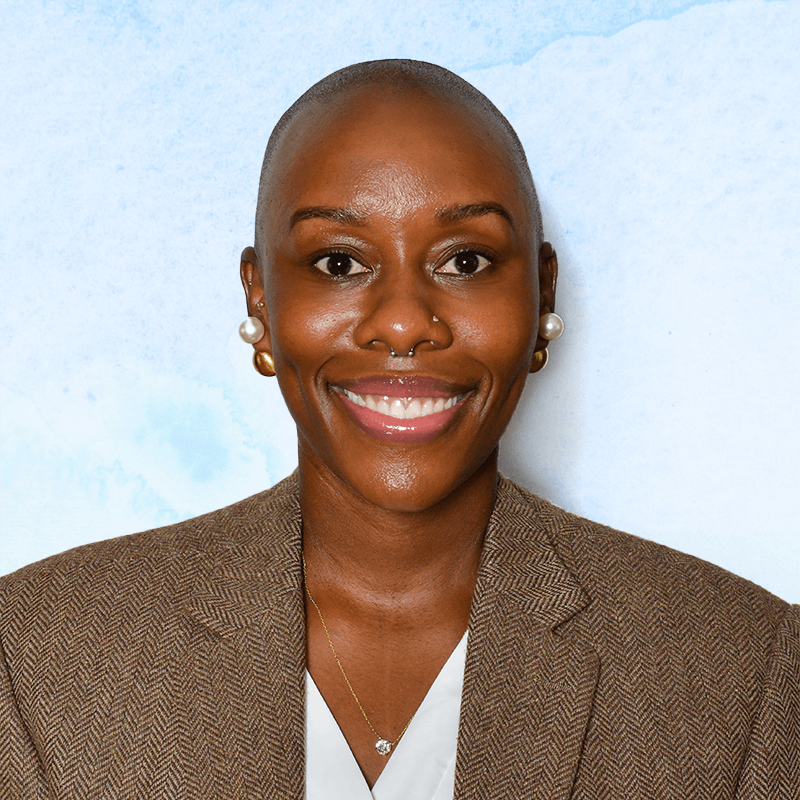
Senior Project Manager, Community-Centered Hospital Initiative (CCHI) and Respectful Maternal Care Resources for Perinatal Quality Collaboratives
Full name and title: Sharon Gutu, MPH
Job Title: Senior Project Manager
Key Projects: Community-Centered Hospital Initiative (CCHI) and Respectful Maternal Care Resources for Perinatal Quality Collaboratives
Joined NICHQ: November 15, 2021
How has your background led you to join a national children’s health organization?
I started grad school in 2015, and I chose to concentrate on maternal and child health for my program, so from the beginning, I just knew that I wanted to work in this field. After graduating in 2017 and going through the job search process, I realized that it was really difficult to find roles that suited my qualifications and also fit within the realm of what I wanted to do. I got a job at the VA as a research assistant and got promoted to research coordinator, then program manager. Although I was experiencing upward growth at the VA it was at the top of my mind that I wanted to shift toward maternal and child health.
While I was in grad school, I worked for a Healthy Start project that was housed within my university. I didn’t know how NICHQ ran when I saw the job posting because it was just posted as Healthy Start and I thought ‘Oh, I’ve worked for a Healthy Start before,’ so I applied to NICHQ at the beginning of 2021. I didn’t get that position because they went with an internal candidate. However, later that year, I received an email stating that there was an opening for a project manager. Since I had already interviewed earlier in the year, I was asked if I was interested in the job. I was like ‘Yay, this is my time to shift to MCH and with a program that I was already pretty familiar with!’ That’s how I came to NICHQ.
How do you plan to incorporate your past experiences in your current role as a Senior Project Manager for the Community-Centered Hospital Initiative project?
A huge focus of my grad school program was program planning, evaluation, and community. CCHI is a perfect combination of all of those because this is the first project I’ve worked on where we are building from the ground up. We’re not only building a model that can be scaled in the future but also building this project for NICHQ in general. I’m tapping into that knowledge from seven years ago of how you plan a program, thinking ahead for evaluation, and how this is going to impact communities. My previous experience at the VA working on something fast-paced and ever-changing is definitely coming in handy now because we’re creating the blueprint, and a lot of things can shift. Also, because of how much I interacted with the community during grad school, I’m able to think beyond NICHQ as the funder for the community-based organizations that we’re going to be working with. I have an idea of what it looks like on the other side.
As a Senior Project Manager, what are you most looking forward to accomplishing with the CCHI team this year?
This year, I’m looking forward to getting all the community-based organizations on board and to start testing the Lean Impact questions that we’ve developed over the past few months. So actually getting the project on the ground and seeing how the community-based organizations are going to be interacting with the communities so we can get the data we need to build this model and move into that next phase, although we have kind of moved way faster than what was even presented in our action plan. We didn’t think we’d even be where we are right now.
You are also a part of the Respectful Maternal Care Resources for Perinatal Quality Collaboratives team. What is your role on the project, and what are some goals for the initiative?
As a senior project manager, I wear many hats because we’re a small team. It’s a 10-month-long subcontract we got at the end of December during the winter holiday break, so we didn’t really get started until the beginning of February. We’ve put work plans together and conduct monthly meetings that bring together partners with whom some NICHQ personnel already have relationships with. The two main objectives for this project are to refine the Safety Program for Perinatal Care, Phase 2 toolkit and to develop an evaluation plan that will be used during the implementation of the resource guide past year one. We have compiled information for the resource guide’s modules and created templates for the final deliverables.
You have experience working on multiple projects during your time with NICHQ. What does NICHQ’s mission mean to you?
I would say, for me, that NICHQ’s mission is especially playing out in the CCHI project in terms of creating and promoting new approaches for lasting systems change. With CCHI, the goal is to support community-based organizations to use the power that they already have within themselves to create these models and partnerships with hospitals that will in turn ensure that Black people and infants have optimal health and figure out the changes that could happen within the clinical spaces, and even communities because health is holistic. It’s not just the care being received in the hospital; it’s also things like access to food.
The NICHQ mission is being realized within the CCHI project because it’s not something that’s being handed down to us from the federal government to say, we already have these parameters set for you to implement a project. We have to be innovative and use the knowledge that we have to actually create something new and be bold. I think all of us have a tendency to lean to what we know, even if we know that it hasn’t been as effective as we want it to be. CCHI is allowing us to step into that boldness of fighting against the status quo to say, yes, we generally use these established systems as an avenue to implement our projects, but right now we’re focusing on utilizing communities. I also worked on Healthy Start, which was also community-focused and addressed the disparities that are present in the American system and how that affects the health of children, mothers, of everyone.
Looking back on your time with NICHQ, what accomplishment are you most proud of?
I would say I’m most proud of becoming a full-spectrum doula last year. While I was at the VA, I came to the realization that I may never be able to work within the MCH field in my public health career, so I started thinking about tangible ways that I could do something to still help in addressing the maternal and child health disparities in the United States. I think that’s when being a doula was becoming more mainstream, so I was like, ‘Okay, maybe one day I’ll become a doula so that even if in my 9-5 I’m not able to fulfill this one desire, I can do it on the side.’ Coming to NICHQ and seeing how doulas inform the MCH space, I continued having that dream, but it’s a little costly to become a doula. Most programs are $500 and up, so I was really happy to finally accomplish that last year with the help of the professional development funds from NICHQ.
Seeing how my work at NICHQ and very early work as a doula inform each other has opened all of these opportunities within the city of Boston and in Massachusetts for me to join coalitions that are focused on birth equity. For CCHI, we’re getting community engagement coordinators for each community that we’re partnering with. One of the organizations that I follow here in Boston actually has a free data storytelling training that I was able to bring to NICHQ for our CECs to participate in, and that’s going to inform our work within the community. That’s probably my favorite accomplishment because it’s just going to further inform and contribute to the work that I do here, but I can also take this work back into the community. It’s this nice feedback loop.
Who or what inspires you professionally?
This might sound a little vain, but I’m just going to go with it. I inspire myself professionally. Growing up, when people asked me what I wanted to do, none of it was within the health space, whatsoever. I remember wanting to be an artist, wanting to be a fashion designer, and then, you know, as I got older, realizing which jobs are going to give you money. As I was going to college, everyone around me was going into the sciences, so I just went down that road not knowing where that was going to take me. After I graduated from college, I had to just sit with myself and ask what I really want to do for the rest of my life, or at least for the near future. I had an opportunity to go into a PhD program and as I was trying to complete the applications, my heart just wasn’t settled in it. I felt I was doing something so that I could be viewed as having accomplished something in my life, like becoming Sharon the Doctor. I think that was my first bold step in making a personal decision for my life to say ‘Okay, this is not the path I want to go down.’ At the time I was working as a substitute teacher in Massachusetts. Based on the schools that I was working in I was able to see the disparities firsthand. I worked at a school where 90% of the kids were below the poverty line and they were being sent home on the weekends with grocery bags so that they would have food. I also saw how health education wasn’t being taught anymore and how that was impacting the conversations that I was overhearing among very young students.
Initially, I wanted to go into global health. One year my mom had gone to Zimbabwe for a funeral, and she met a young woman there who was pregnant and about to give birth. When she came back, she found out that the woman had died from hemorrhaging after giving birth. I thought this is why I should do global health because this shouldn’t be happening in Zimbabwe. As I was looking at programs, I came across MCH, and I was like ‘This might even be more concentrated in what I want to do.’ Then once I got to grad school, I found out these issues are extremely persistent within the United States. Zimbabwe is home for me, but I can also address these issues where I am right now.
I think the trajectory that my career has taken, it’s like everything I’ve done has aligned for me to be where I am right now, but it wasn’t this plan that I had since I was five years old, or even when I was 21. I didn’t even have this plan when I was 25, graduating from grad school. I’m my inspiration professionally because I’ve kind of taken the road less traveled. If you look at my resume, you see a plan, a concrete progression of my career, but if you speak to me, I didn’t even know that I would be at NICHQ or a doula, falling into these spaces where everything that I like, my passions outside of work and within work, are just aligning. Even though sometimes I’ve been unsure if I’m doing the right thing or if I’m making people proud, I think I’m finally in a place where I’m really confident about where I am. Although I don’t know every little detail of what my professional life is going to look like within the next five or 10 years, just based on how the last 12 years have gone, I’m sure that I’ll land on my feet.